
How Understanding Our Brains Can Help Reduce Youth Violence
By Trisha Kircher, Hope Task Force Volunteer
In February 2026, the Roca Institute partnered with Cuyahoga County Office of Violence Prevention to bring its nationally recognized violence-interruption model to Cleveland. Through this partnership, community members, service providers, and local leaders, including Hope Task Force volunteers, were able to participate in Rewire CBT training—an approach that helps us better understand how trauma and stress shape behavior and how we can respond in ways that reduce harm.
When I attended the training, I expected to learn a few new tools and insights that I could share with the Euclid Hope Task Force and other community members who are working every day to support our youth. What I didn’t expect was how deeply it would reshape my understanding of how trauma and stress influence the brain—and how those impacts show up in behavior. The training offered something simple but powerful: a clearer picture of how the brain works under stress, and how the Think–Feel–Do (TFD) cycle can help interrupt violence before it starts.
When community members understand what young people are navigating—and how their brains respond to stress—we can show up differently. We can respond with more patience, more clarity, and more compassion. And that shift can ripple across neighborhoods, families, and systems.
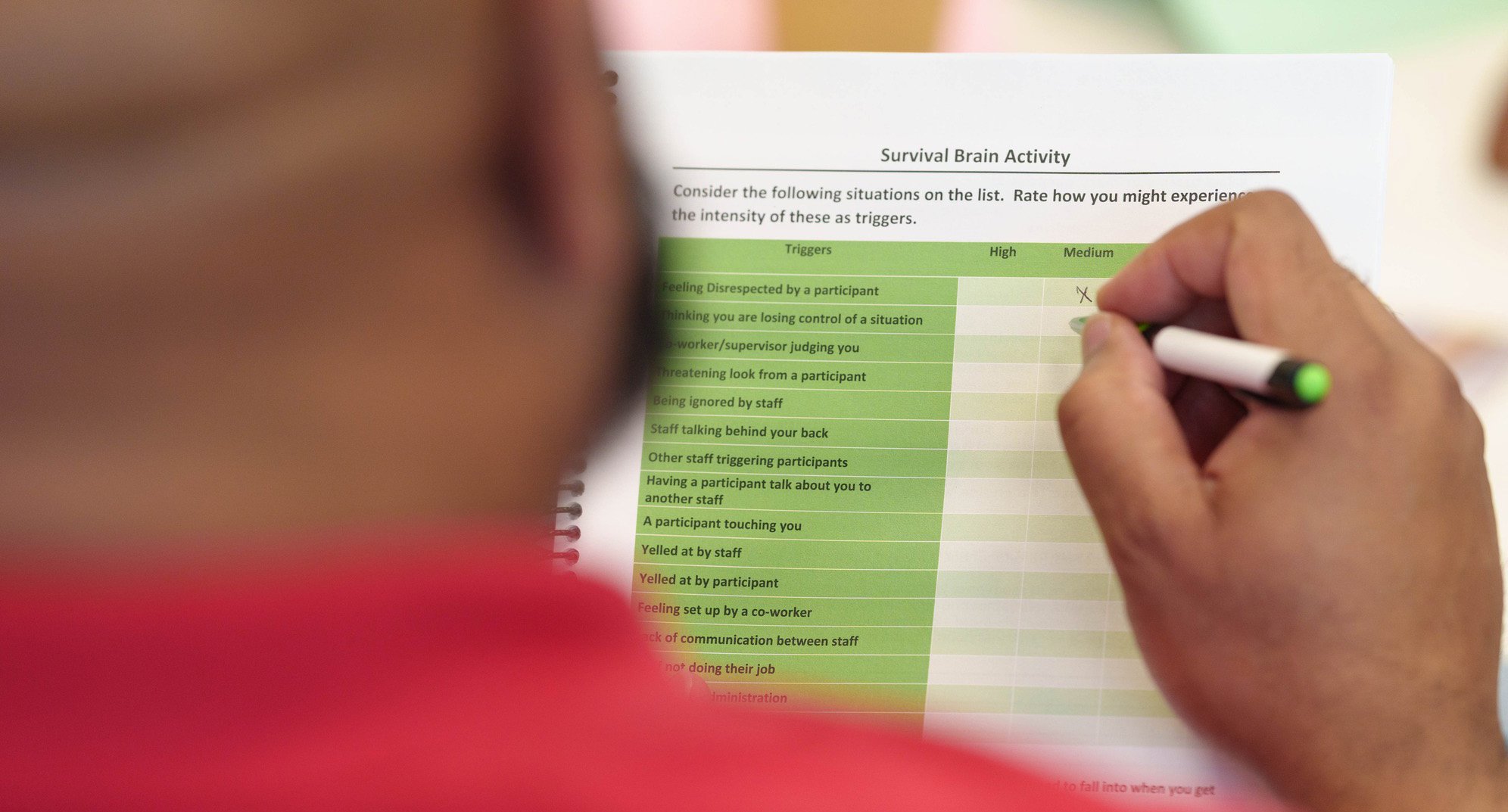
How the Survival Brain Works
For youth who have experienced trauma or chronic stress, the brain becomes wired for protection. The “survival brain” reacts instantly through:
Fight — aggression, defensiveness
Flight — shutting down, withdrawing
Freeze — feeling stuck or unable to respond
These reactions are instinctive, not intentional. A tone of voice, a look, or a misunderstanding can trigger the same response as real danger. Recognizing this helps adults de-escalate instead of escalate.
Seven Skills That Help Youth Rewire
Rewire CBT teaches seven practical skills that interrupt automatic reactions and support healthier choices:
Being Present — grounding before responding
Labeling Feelings — naming emotions to reduce intensity
Flexing Thinking — challenging assumptions
Acting on Values — choosing behaviors that reflect who you want to be
Planning Ahead — preparing for tough moments
Problem Solving — breaking challenges into steps
Building Connections — strengthening supportive relationships
When adults model these skills, youth learn them more easily.
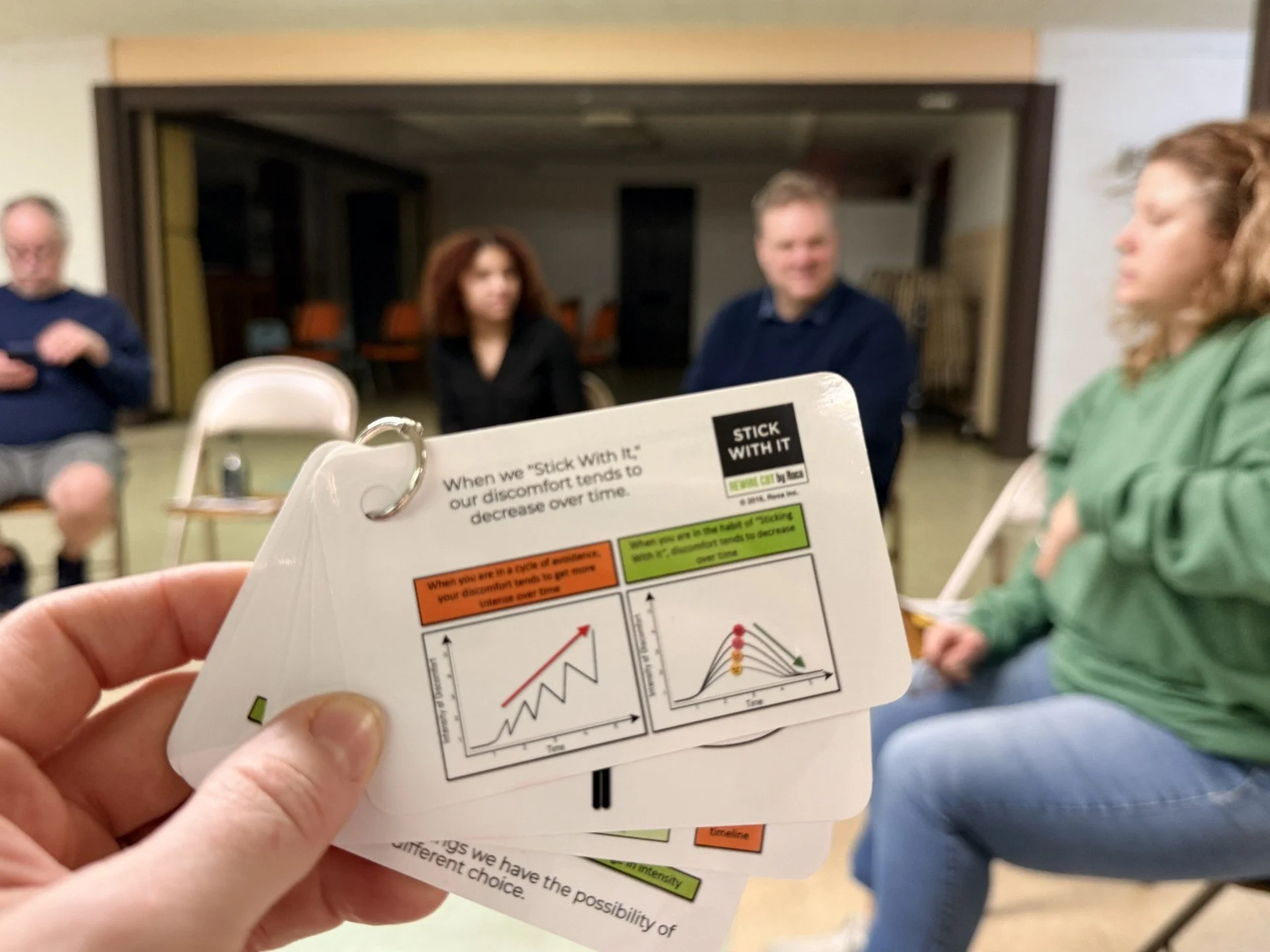
ReWire CBT “Key Cards” available to trained ROCA facilitators.
The Think–Feel–Do Cycle
Thoughts, feelings, and actions influence each other. For youth under stress, this cycle can move so fast that the “thinking” part barely appears—survival instincts take over. The seven skills help slow the cycle down so young people can notice what’s happening inside them and choose a different response.
Key Cards make these skills usable in real time. They offer quick prompts that help someone pause, ground themselves, or shift their thinking during tense moments.
Where These Tools Help
These skills can be used anywhere youth experience stress:
school hallways
community events
family conversations
street interactions
moments of conflict or misunderstanding
They help adults:
de-escalate heated situations
build trust
create space for reflection
support emotional regulation
model calm behavior
Every pause, every breath, every moment of curiosity instead of judgment helps rewire the brain toward healthier patterns.